Volatility is one of the most frequently referenced concepts in investment discussions, yet it is often misunderstood. Sharp price movements are commonly interpreted as signs that markets are unstable, fragile, or fundamentally unsound. This interpretation blends two distinct ideas into one: volatility and instability. While both involve change, they describe very different conditions. Volatility reflects the degree and speed of price movement, while instability relates to the breakdown of underlying structures or assumptions. Confusing the two can distort how market behavior is understood, especially during periods of heightened activity. Clarifying this distinction helps explain why markets can appear turbulent while remaining structurally intact.
Volatility as a Measure of Movement, Not Failure
At its core, volatility measures how widely prices fluctuate over a given period. It captures variation, not direction or quality. High volatility indicates that prices are moving quickly and with greater range, but it does not explain why those movements are occurring. Markets can be volatile while continuing to function as intended, processing information, adjusting expectations, and redistributing capital. Volatility often increases when uncertainty rises, such as during economic transitions or shifts in policy outlook. In these moments, prices respond to changing assumptions rather than to structural breakdown. Volatility, then, is a sign of responsiveness, not dysfunction.
Stability Exists Beneath Price Fluctuations
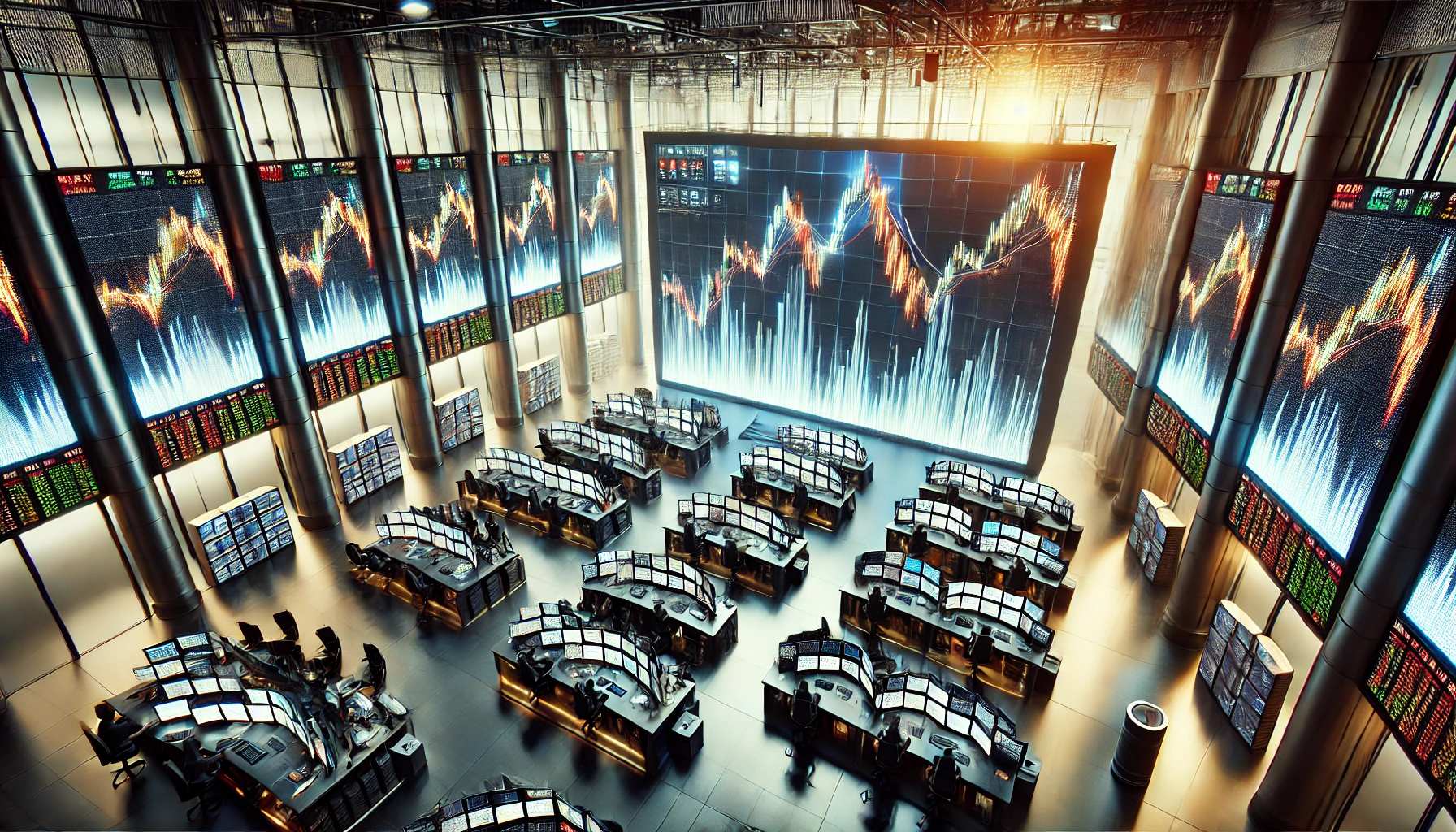
Market stability is rooted in deeper mechanisms than daily price changes. Clearing systems, liquidity provision, regulatory frameworks, and participant behavior all contribute to whether a market remains stable. These elements can remain intact even when prices move sharply. A market experiencing high volatility may still exhibit orderly trading, consistent pricing mechanisms, and functional settlement processes. Instability, by contrast, emerges when these foundational elements are compromised. This distinction explains why volatility alone is an incomplete indicator of market health. Movement can coexist with stability when underlying systems continue to operate reliably.
Information Flow and Repricing
Volatility often reflects periods of intense information flow. When new data challenges existing assumptions, markets reprice assets to incorporate revised expectations. This repricing process can appear chaotic on the surface, but it follows internal logic. Prices adjust not because the system is unstable, but because participants are reassessing value under new conditions. Rapid adjustment is a feature of liquid markets, allowing them to absorb information efficiently. Interpreting this process as instability overlooks the role volatility plays in aligning prices with evolving understanding.
The Role of Expectations and Surprise
Expectations influence how volatility is perceived. When markets move within anticipated ranges, volatility tends to attract little attention. When movements exceed expectation, they are more likely to be framed as signs of instability. Surprise amplifies perception, even when underlying processes remain unchanged. Volatility becomes alarming when it challenges assumptions about predictability rather than when it threatens structure. This explains why similar levels of price movement can be interpreted differently depending on prevailing sentiment and narrative.
Volatility Across Different Time Horizons
The meaning of volatility changes with timeframe. Short-term volatility captures immediate reaction, while long-term volatility reflects broader variability across cycles. A market can exhibit high short-term volatility while maintaining long-term stability, with prices oscillating around durable trends. Viewing volatility without regard to timeframe can lead to misinterpretation. Short-term fluctuations may obscure longer-term patterns that demonstrate resilience and continuity. Stability often becomes visible only when volatility is observed across extended periods.

When Volatility and Instability Do Align
Although distinct, volatility and instability can coincide under certain conditions. Structural failures, such as liquidity breakdowns or systemic stress, often produce extreme volatility. In these cases, volatility reflects more than repricing; it signals disruption in core mechanisms. However, these situations are the exception rather than the rule. Most volatile periods do not escalate into instability. Recognizing this distinction prevents overgeneralization and helps differentiate between normal market adjustment and genuine structural risk.
Interpreting Volatility More Accurately
Understanding volatility without equating it to instability requires focusing on function rather than motion. Price movement alone does not reveal whether markets are working or failing. Stability is reflected in continuity of operations, confidence in settlement, and persistence of participation. Volatility, meanwhile, reflects how actively markets are responding to uncertainty. Separating these concepts allows for clearer interpretation of market behavior, especially during periods that appear turbulent on the surface but remain structurally sound underneath.